
MY Mission to Make Indian Scriptures Accessible to All Ages
I am dedicated to presenting the profound wisdom of Valmiki Ramayana, Viyasa’s Mahabharata with Blogger’s Notes, and the Bhagavad Gita, and the Upanishads through Blogger’s Comments and original verses, tailored for both children and adults alike.

Understanding Indian Scriptures
Indian scriptures, including The Ramayana, The Mahabharata, The Bhagavad Gita, and The Upanishads, form the spiritual and cultural foundation of India. These texts offer profound insights into philosophy, morality, devotion, and the nature of existence, serving as guides for individuals OF ALL AGES seeking wisdom and spiritual growth.
About


The Ancient Indian Scriptures!

Highly Recommended To Adults And Older People.

RAMAYANA MAHABHARATA UPANISHADS & BHAGAVAD GITA


Sisters And Brothers!

Spiritual Aspirants and Enthusiasts Worldwide!

Hi, There!

BRIEFLY ABOUT ME:

I am Raguram, an Indian Citizen, 66, hailing from Tamilnadu State in India. I am a Hindu by religion. I am a Lawyer by profession. I am deliriously interested in the ancient Indian Scriptures.


ABOUT THIS BLOG:

Haven't you always been on the lookout for a genuine and basic course in Ancient Indian Scriptures?

An assured course that will at once bring within your intellectual and spiritual reach and grasp, whatever be your age, not just the fundamental facts and information about the ancient scriptures of India, but also get you a strong footing in the said scriptures?

And, if you are the parents of children, who know nothing about the Ancient Indian Scriptures which constitute the Soul of India, haven't you always been looking for that one blog that will gainfully engage your children and instruct them about the glorious, character-building Scriptures of India?

Well, YOU have finally and definitely arrived at the destination!


WHAT IS THE PURPOSE OF THIS BLOG?

The purpose of this CATEGORY BLOG is to bring to the Readers, under one and the same Blog-Site, the selected ancient Indian Scriptures: the Principal Upanishads, the Bhagavad Gita, the GREAT twin Epics, the Ramayana and the Mahabharata FOR ALL AGES.

THE NATURE AND SCHEME OF THIS BLOG:

This blog does not contemplate a separate treatment and Pages for other ancient Indian Scriptures like the Vedas, the Brahma Sutras, the 18 Puranas and other related Works and Texts.

Each Blog-Post contains 4 Separate Pages or Sections each for The Ramayana, The Mahabharata, The Principal Upanishads and The Bhagavad Gita.

 Each Post contains curated and specially structured passages from Saint Valmiki's RAMAYANA,  Saint Vyasa's MAHABHARATA, and the Text and Comments on each Verse of the Principal UPANISHADS and the Text and Comments on each Verse of the BHAGAVAD GITA.


PAYMENT METHOD:
PAYMENT BUTTON:


Payment Button is conceived by this blog. The Readers worldwide get FIFTEEN POSTS absolutely free of cost. Thereafter from the Sixteenth Post onwards the Readers IN INDIA will have to pay the price of Rupees 10.00 (INR 10.00) for each Post. The Readers in the United States of America have to pay USD $ 0.10 for each Post staring from the Sixteenth Post. THE READERS IN OTHER COUNTRIES WILL HAVE TO PAY IN THE CURRENCY OF THEIR OWN INDIVIDUAL NATION AN AMOUNT EQUIVALENT TO THE USD $ 0.10 FOR EACH POST STARTING FROM THE SIXTEENTH POST.


THE CONSTITUENTS OF THE SCRIPTURES OF ANCIENT INDIA:

As you know, the ancient Indian scriptures principally constitute the four Vedas, The Upanishads, The Bhagavad Gita and The Brahma Sutras on the one hand and various Puranas, The Epics and The Itihasas like The Ramayana and The Mahabharata and other works on the other.

The four Vedas, The Brahma Sutras or the Vedanta Sutras and other works and Texts have not been selected for individual and exclusive treatment in this blog.


WHAT IS THE SCRIPTURE OF THE HINDUS?

The Christians have the Holy Bible as their Scripture!

The Muslims have the Holy Quran as their Scripture!

But the Hindus cannot claim any individual book as their Holy Book or Scripture!

As stated above, the Hindus have too many Scriptural Texts to claim any one as constituting exclusively their singular Scripture or Holy Book.


THE TRINITY OF THE HINDU SCRIPTURES:

Of the Scriptural Texts, three important Works are considered as the most authoritative; they constitute what is called the Prasthana Thraiam or Prasthanatrayam. It means the Trinity of Important Scriptural Works. They are the Upanishads, the Bhagavad Gita and the Brahama Sutras!

Thus any scriptural Work containing teachings that cannot be validated on the basis of the basic tenets of any of these Three Major Works forming the Trinity of Hindu Scriptures cannot pass muster; and the same will be rejected as without any sanction.


WHY BRAHMA SUTRAS IS NOT INCLUDED IN THIS BLOG?

The abstruse Work, The Brahma Sutras, is very difficult to traverse. It needs an independent and exclusive treatment. It will be taken up later for individual and exclusive treatment in a separate blog only after we see the end of this blog.

For the removal of doubts, it is stated that this blog deals only with the twin epics, the Ramayana and the Mahabharata, besides the principal Upanishads and the Bhagavad Gita.


 FOR CHILDREN EXCEPT THE UPANISHADS ALL OTHER ARE RECOMMENDED.

The question as to why the Sections meant for Children include Bhagavad Gita also may arise.

There is a misconception about the proper age for reading the Bhagavad Gita. Even among very informed Indian people, this misconception has persisted throughout the ages. The modern age and Times is no exception to this singular and uninformed notion that the Bhagavad Gita is meant only for Older People and senior citizens! What is the use of taking to the proper study of the Gita only towards the end of one's life? The Bhagavad Gita teaches the art of living properly, indulging in proper actions and enjoying life properly. So the growing children must be taught on the nuances of proper action as enshrined in the Bhagavad Gita. The Bhagavad Gita contains the quintessential wisdom of the Upanishads which have been rendered in a very simple format and language. The Bhagavad Gita also teaches Four kinds of yogas or, we may say, ways of life. Out of these four types and kinds of yoga, I am of the opinion that the Karma Yoga (the yoga of Proper Action) and the Bhakti yoga (the yoga of Devotion) must be taught to children below 19. The children below 19 must be exposed to the philosophy of Gita while they are still young. This alone will safeguard our young people from the vicissitudes of various corrupt forces inherent in the day-to-day life of children in the modern Times. If the children are taught the teachings of the Bhagavad Gita, this will stand them in good stead in their future. There are no joint families in vogue in the world society. The older people cannot teach their grandchildren on leading the proper ways of moral and fulfilling life. At such juncture the Bhagavad Gita is the only solace and solution available to the problems of the growing future citizens!


ABOUT MY EDUCATION:

Name: K. Raguram, M.A., B.L.

Date of Birth: 04-12-1959

Nationality: INDIAN

Religion: HINDU

Father's Name: RM. Karupaiya

Mother's Name: K. Logambal.


Education:

Upto the Fifth Standard, in TELC School, a Protestant educational institution in 1968.

MATRICULATION:

From the Sixth to the Eleventh Standard, for six deliriously happy years, from 1969 to 1976, I studied in De Britto High School, Devakottai District, staying in Britto Hostel run by the same Roman Catholic Jesuit Fathers running the School!


THE CHRISTIAN VIRTUES:


Thus before the year 1976, I had been educated completely about the Protestant and Catholic Christian Virtues!

Especially, I had had the benefit of listening daily to the engaging and interesting stories suitably selected from the Old Testament gloriously recounted by gifted teachers of the good old TELC Middle School at such an impressionable and tender age!

Apart from that, as an M.A. English Literature student, I was advised by my Hindu Professor and Hindu Lecturers at Pushpam College, Poondy, near Thanjavur City to revisit the Holy Bible besides thoroughly reading the History Of English Literature which would enable me understand the very psyche of the English Poets and Dramatists and the dynamics of their creativity!


PRE-UNIVERSITY COURSE:


After a brief stint in Nehru Memorial College, Puthanampatti near Tiruchirappalli for the Pre University Course (PUC) in History, Economics and Commerce, I joined in Jamal Mohammed College in Tiruchirapalli for my (B.A.) Undergraduation in History, Social Science and Comparative Governments.


UNDER-GRADUATION:

Well, in Jamal Muhammad College I imbibed the basic and essential virtues of the Mohammedan Religion. Also my Muslim friends had given me some books in Tamil about the teachings of the Holy Quran. They constituted a good and enjoyable and highly illuminating read. Also I had the benefit of witnessing many a Muslim lecturer who gave us, their students, an objective lesson as to how an ideal Muslim should conduct himself in his private and public life!

Thus I can pride myself on having had the benefit of imbibing the basic and essential virtues of the Christianity and the Muhammedanism while I had not crossed twenty-three years of age!

FRUITFUL DIVERSION:

This has stood me in good stead, till now, in my understanding of the Christian and Muslim religious psyche.

Only a miniscule minority among the Muslim youths have been successfully converted by some of their villainous elders and some venal religious teachers having fundamental and foundational but always miscued and irrational anti-India ideology, anti-Hindu notions and perverted religious prescriptions. EXTREMISM AND SHAMEFUL ACTS OF TERRORISM WILL NEVER PAY! These misguided Muslim youths are up in arms against the very idea of the Indian State which has for its basis the ineffable DOCUMENT, the supreme Constitution which works for all the citizens of india.
Of course, these misguided miniscule Muslim youths have no support whatsoever in the Heart and Soul of the majority Indian Muslims!


POST-GRADUATION:

After my B.A., I joined in Sri Pushpam College, Poondy, near Thanjavur City for my              Post-Graduation (M.A.,) in English Literature.

My first year as a student of English literature was spent in the hostel run by the same institution.

For my second and final year as an M.A. student at Poondy Pushpam College, I became a day scholar having gone back to reside in Thanjavur City.

There I found myself buying books on literature and allied subjects. And I completed the course in 1983.

I BUY A COMMENTARY ON THE BHAGAVAD GITA!:

By this time I had started to feel an intense sense of inadequacy when dealing with anything about Hinduism and ancient Hindu scriptures!

So one day I found myself buying a copy of the great commentary on Bhagavad Gita by Swami Sivananda.

But ironically I could not understand even one single Sloka or Verse of that great Work.

Such was the depth of my ignorance on any matter and text dealing with Hinduism and ancient Indian Scriptures!


STUDY OF LAW:

After my post-graduation in 1983, I found myself taking up the study of law in 1986 in Law College, Madurai!

And I became a lawyer after my enrolment in Tamilnadu Bar Council in the year 1989.


APPRENTICESHIP:

I found myself starting on my career as a junior lawyer under the able stewardship of Mr. C.P. Pattabiraman, one of the famous Constitutional lawyers in  Madras City.

After a year's practice as a junior lawyer in Madras, I came back to my native place to set-up private practice exclusively on the Civil Side.

Even as a student I had, over a period of time, purchased a great number of books of all sorts. Even though I was a practising advocate, my habit of reading books on English literature, novels biographies and autobiographies continued.

On a Sunday morning, as I had got up with an irritable mood, I found myself singularly incapable of read anything. On that morning, I selected the able Commentary on The Bhagavad Gita by that extraordinary sage, Swami Sivananda! Then I chanced upon the immortal Commentary on The Bhagavad Gita by the Sage, Swami Chidbhavananda, the founder of the Ramakrishna Tapovanam, Thirupparaithurai, Tiruchirappalli, Tamil Nadu.
And I had become so interested in reading books on ancient Indian Scriptures which habit continues till today!

Folks! You will get enough evidence and continuous proof of my resultant spiritually enlarged personality with an extra keen intuitive understanding of even the esoteric and highly philosophical Upanishadic matters relating to the Indian spirituality only if you read every Post of this blog regularly. Through various Blogger's Comments for almost all the Posts to come, I will exhibit my good understanding of the ancient Indian Scriptures.


THE PURPOSE OF THIS BLOG:

This blog should be perused by all people: children, adults and older people.

WHY?


CHILDREN:

 This Category Blog is meant for readers of all ages. It is for both children, adults and older people.

In modern Times, bringing up even a single child in a family is not an easy joke. And bringing up two children by their parents unassisted by the grown ups in the family should be an uphill task. This is where this blog can come in handy for the distraught parents. In modern times, both the parents are employed. As such they have no time to spare, apart from giving a costly education to their children, to take care of their mental and spiritual growth. Under such circumstances, this blog can step in and do wonders for our children.

Very small children will be greatly benefited from reading the passages in English from the Ramayana and the Mahabharata Post after Post. If they are just grown up tiny tots, then their parents must take turns in reading out the passages from the twin Epics to them at weekends. The Ramayana and the Mahabharata are great character building Books among the Hindu scriptures. The great characters from the twin Epics will go a long way in moulding the tiny tots' Psyche and inner person. The cardinal virtues like purity, self-control, detachment, truth and non-violence can be taught to these smallest children without much of an exertion with the help of these two Epics. Among grown up children and young boys and girls under 19 years of age, they  can take anyone of the great characters from the Epics and model their own character on the same.

Apart from these highly important benefits, the small children as well as young boys and girls can benefit from this blog to cultivate the proper way of conversing with peers and adults and they can also build on their active vocabulary. The linguistic skills will improve greatly and the proper way of expressing their innermost feelings and imagination in English are possible through a regular reading of this blog.

Another question crops up. Why should children learn Bhagavad Gita at this level? Indeed this is the time to get to understand the roots of the Indian Psyche and the great minds of our ancient Seers, Sages and Rishis. I am of the strong conviction that small children should not only get to know, but also imbibe the important tenets and philosophy of the Gita. This is the time and age and stage of mental development to cultivate the Gita philosophy which will stand our children in their later years wherever they go in good sterling stead. I AM OF THE CONSIDERED OPINION THAT THE CHILDREN ALL OVER THE WORLD WILL GREATLY BENEFIT FROM A REGULAR STUDY OF THE GITA. IF THEY DO, THERE WILL BE NO TEENAGE CRIMES WHICH HAVE BECOME POPULAR EVEN IN INDIAN CITIES. THE BHAGAVAD GITA IS PART OF THE VEDANTA. THE VEDANTA IS NOT CONFINED TO HINDUS ALONE. IT BELONGS TO THE ENTIRE HUMANITY. FROM A REGULAR STUDY OF THE GITA, THE CHILDREN AND THE YOUNG BOYS AND GIRLS THE WORLD OVER WILL GREATLY BENEFIT! SO NOW IS THE TIME FOR THE CHILDREN OF THE GLOBAL VILLAGE TO LEARN THE STORIES OF THE TWIN EPICS AND THE PHILOSOPHY OF THE GITA!

The Lord of Gita chose to teach Arjuna the immortal Philosophy of this extraordinary work which is an able synthesis of the Upanishads, only when His disciple/friend, Arjuna, was up against the mighty inner psychological wall. This is an ideal book to find answer for all human predicaments! It is good for children to start early by way of equipping themselves with the strength of character and fortitude of attitude.

Irrespective of your Religion and Creed and Faith, when you are disillusioned with life and find yourself plumbing the depths of grief, the Bhagavad Gita is the one and only book to read! The moment you start reading this extraordinary Scripture belonging to the entire humanity, instantly you feel lifted almost bodily out of the quicksand and quagmire of doubts uncertainties the human life on the earth is filled with.

The Bhagavad Gita belongs to no particular Religion. It is part of the Vedanta. Vedanta has no religion. The Upanishadic Sages were indeed Rishis or Seers! The Bhagavad Gita is an Upanishad.


ADULTS AND OLDER PEOPLE: IN MY CONSIDERED OPINION ALL THE MATURED PEOPLE OF THE WORLD MAYBE DIVIDED INTO THREE TYPES:

In spiritual matters there are three kinds or types of people in this world. Type 1. Contented People. Type 2. Suffering People and Type 3. Older People (who are not elderly and tottering).

TYPE 1 PEOPLE:

THIS KIND OF PEOPLE IN THE WORLD GO THROUGH THEIR ENTIRE LIVES IN A CARE- FREE, HAPPY AND SATISFIED MOOD. THEY HAVE NO MORE EXPECTATIONS FROM LIFE!  THEY ARE COMPLETELY SATISFIED WITH WHO AND WHAT THEY ARE. THEY DON'T KNOW THEY CAN AND SHOULD ENLARGE THEMSELVES EXPONENTIALLY! THAT TO BE IDLE AND CARELESS ABOUT THEIR EXCEEDINGLY EXPONENTIAL POSSIBILITIES IS A POSITIVE ACT OF CRIMES! The Rishi in the Isha Upanishad calls and accuses such people as Slayers of their Self or Soul.

Such people of inordinate contentment are in a mould! They are whole-heartedly satisfied with their lives. Legally it is not a crime to go through life with an unrelieved sense of contentment. But in spiritual parlance, it is a criminal activity; it tantamounts to taking one’s own life! In India and attempt to commit suicide is a crime. This kind of contented life amounts to butchering one’s own self.  The contented people are comfortable people. They have or at least they think that they have no care in the world. They are generally economically sound if not well to do. Or they have what it takes and what it needs to make their lives contented and comfortable and cosy. Or they are really very well to do. You can never put them in any age group. The may be  grown up teenagers or young students, youths, the very salt and flavour of the earth. Or they may belong to the middle-aged stage. Finally they may really be older people. They are all satisfied with their individual life. I should like to call them, without giving any offence whatsoever, shallow people. They are all self-contented youths, middle agers and older people. THIS BLOG WILL TOUCH THEM DEEP INSIDE AND GET TO THEIR CORE TRANSFORM. THEY WILL, FOR THE FIRST TIME IN THEIR YOUNG OR OLD LIFE, GET TO KNOW WHAT IS THE OTHER SAINTLY SIDE LIKE! THAT IS, THEIR SPIRITUAL SIDE! THE SPIRITUALITY OF THIS BLOG WILL ARREST, HOLD AND ENERVATE THEIR INNER PSYCHE. AFTER READING 10 OR 15 POSTS OF THIS BLOG WHICH SERVES THEM THE QUINTESSENCE OF THE ANCIENT INDIAN SPIRITUALITY AND WISDOM AND JANANA ON AN ORNATE BLOG PLATTER, THEY WILL START TO LIVE DIFFERENTLY. THE BLOGGER'S PERSONALITY DOES NOT COUNT FOR MUCH. ANCIENT INDIAN RISHIS AND SAGES AND SAINTS WILL TEACH THEM AS TO WHAT THEY HAVE MISSED OUT ON REAL TIME LIVING. WITH THE RESULT, THE TYPE 1 PEOPLE WILL START TO LIVE A FULL AND FULFILLING LIFE!

TYPE 2 PEOPLE:

These people are intensely suffering people. There is no word to describe their suffering. Suffering of all types. Mental and physical suffering. A death in the family. A debilitating disease to self or someone close to the heart. Debilitating and abject poverty. Failure in love. Failure in the profession. Failure in the career. Failure in the exam. Failure in life itself. A debilitating sense of having been betrayed. Persons who have committed a grave mistake in life. Persons who have committed an unpardonable sin and do not know how to rectify and fully atone for the same. Persons who do not know how to approach God in the face of the commission of something grave and sinful. Persons who have recurring suicidal thoughts. Persons who can not forgive someone for someone act of commission or omission and can not adequately get even with those people. Persons who have an enemy or enemies who are powerful or dangerous or damnably resourceful or all rolled into one. Persons, girls and boys, youths, men and women who are revolting and hideous and very very ugly. Persons who are physically challenged. Persons who find themselves to laughing stock. They go through life with so much pain in their heart and soul that they simply wish that the earth will halve or cave in under their feet and suck them into its bosom and thus put a definite full stop to their unenviable life. These people all over the world are constantly looking for the light at the end of the tunnel. This is where the ancient Indian Saints, Rishis and Seers get into an activated mode. They do not preach. They do not evaluate you. They do not subject you to any kind of indoctrination. They just put you in a place, not under the arc light, but a vantage point,  from where you could see into the life of things. Your attention gets riveted. Your ceaseless act of thinking almost stops. The very course of your blood slows down. In a trice, at some point of your reading this blog, you, for the first time in a long time, feel really engaged with life which gives you a quintessential rest! Not tumultuous movement. But a long-felt rest and quiet! This luxury of rest enables you to make a clean break with the enchaining past and start your life as though you were a new-born baby, because you have discovered the inexhaustible inbuilt fountain of happiness which is called your Self or Soul!


TYPE 3 PEOPLE:

For good or bad you have lived your life. Not to the full. Your bones and sinews still clamour for action. You have just embarked on old age. That is, you are newly old! You are constantly ruminating. But you sense there is still life in you. There are years to go. The mind is constantly ranging among and rummaging into the past. You are constantly evaluating. Why did I do that? Why didn't I do that? Why didn't I desist from doing that? I could have acted differently on that occasion! Why I didn't and couldn't forgive her/ him? You live in the past. But there are years to go! This is the time, my folks, to turn to the words of the ancient Indian Sages and Saints and Rishis! Make the remaining days and the remainder of your life most meaningful and beneficial! Give yourself unto the Rishis! Irrespective of your religion, class, caste and sect, take to the regular reading of this blog. It will turn your life not only meaningful but topsy-turvy, from where you will start to look at life from an entirely different angle and start enjoying the remainder of your life for the first time in your life! You might be past your prime. But, that is only bodily! You are a great possessor of the priceless Soul which is ever new and wants you to become its intimate friend. For the first time in a long while you realise that it is not too late at all and your soulful journey towards befriending your priceless Soul has just started! Look at the full and sumptuous life ahead! The life you have not had and the living you have denied yourself! Start to live! Get cracking!


GENERAL ACKNOWLEDGEMENT:

It is not my duty but a great privilege to make this general acknowledgement to the two great Maths in Tamil Nadu, INDIA, apart from the particular acknowledgement at the start of each Section in this About Page.

The two Maths are Sri Ramakrishna Math, Mylapore, Chennai- 600004 and Sri Ramakrishna Tapovanam, Tirupparaithurai - 639 115, Tiruchirappalli District. I have been reading their scintillating, spiritual books for more than three decades. I have greatly benefited from a regular and reverent study of the ancient Indian Scriptures. Apart from their spiritual services to the Indian society, their low-priced and excellently got up books on all the ancient Indian Scriptures and Devotional Literature is also an immense service to the young and the old of not just India but the people worldwide. But for their dedicated service in the field of writing, compiling, printing, binding and selling very very low-priced books, educated people like me belonging to the lower middle class in could never have got to reading the excellent books and immensely authoritative Commentaries on the ancient Indian Scriptures. I take this opportunity to salute and touch reverently the feet of all the Swamis and Sanyasis belonging to the Sri Ramakrishna Order who have wonderfully penned such soul-filling Commentaries on all the ancient Indian Scriptures. My only regret is that I could not help setting up the payment button for this blog because of the financial condition of my family.

Before bowing to you all and say goodbye and wish you a good read, Blog-Post after Blog-Post, let me thank the Sri Ramakrishna Math, Mylapore, Chennai- 4 because I have adapted a passage from one of their seminal books, by name, A PRIMER OF HINDUISM, penned by Mr. D. S. Sarma, in structuring the section in this About Page under the heading HINDUISM.

AND I SINCERELY ASSURE THAT THE ACT OF ADAPTING STARTED AND ENDS HERE AND WILL NOT BE EXTENDED TO THE BLOG PROPER, THE BLOG-POSTS EVER!


HINDUISM:


ADAPTED FROM MR. D. S. SARMA'S SEMINAL BOOK ON HINDUISM. (Published by Sri Ramakrishna Math, Mylapore, Chennai -600004).

The distinctive feature of Hinduism is that it has no founder. It does not depend for its authority on the life history of any man.

The authority of Hinduism is Eternal Truth itself to which every man's spiritual experience can bear witness.

Truth revealed itself in this land through the minds of great Rishis. And this revelation is embodied in Shruti.

Shruti:

Shruti literally means what is heard. Great Rishis who had perfected themselves by long tapas or meditation are said to have heard in their hearts eternal truths and to have left a record of them in our sacred books.


Vedas:

They are called the Vedas -- the Rig Veda, Yajur Veda, Sama Veda and Atharvana Veda. The Vedas are supremely authoritative. They teach a man the highest truths that he can know and to lead him to his highest good. As Truth is eternal, the Vedas which have revealed it to the Hindus are considered by them to be eternal.

Each Veda consists of four parts. 1. The Mantras or hymns; 2. the Brahmanas or explanatory treatises on mantras and rituals; 3. the Aranyakas or the meditations in the forest and 4. the Upanishads or mystic treatises revealing the most profound spiritual truths and suggesting the ways of realising them.

There is another kind of division according to the subject matter. They are as follows:-

1. Karma-kanda; it deals with rituals.
2. Upasana-kanda; it deals with worship.
3. Jnana-kanda; it deals with the highest knowledge.


Upanishads:

Each Veda consists of many Upanishads. The Upanishads are many in number. But the twelve of them are considered the most important. They are:
1. The Isha (pronounced as eesha) Upanishad,
2. The Kena Upanishad,
3. The Katha Upanishad,
4. The Prashna Upanishad,
5. The Mundaka Upanishad,
6. The Mandukya (pronounced as Maandookya) Upanishad,
7. The Aitareya Upanishad,
8. The Taittiriya (pronounced as Taitireeya) Upanishad,
9. The Chandokya (pronounced as Chaandokya) Upanishad,
10.The Brhadaranyaka (Brhadaaranyaka) Upanishad,
11. The Kaushitaki (Kausheetakee) Upanishad and
12. The Svetasvatara (Shvetaashvatara) Upanishad.

These Upanishads are very important for the Hindus. Because they contain the highest truths known to Hinduism.


Prasthanatrayam:

Prasthanatrayam means the three authoritative scriptures. The Upanishads, the Bhagavad Gita and the Brahma Sutras are considered the three authoritative scriptures in Hinduism.

Badarayana is the author of the Brahma Sutras. It is also called the Vedanta Sutras. Vedanta means the end of the Vedas.


Smriti:

The Shruti is the primary authority to Hindus. But they have a number of Secondary authorities based on Shruti. Of these first comes the Smriti.

The Smriti consists of human compositions. Their object is to regulate personal and social life and to bring into existence institutions embodying the principles of the Shruti. Therefore the laws for regulating Hindu society from time to time are codified in the Smriti. THUS THE LAWS CHANGE FROM TIME TO TIME. THE RISHI'S WHO GUIDE HINDU SOCIETY FROM AGE TO AGE MAKE THE NECESSARY ALTERATIONS IN THE LAWS ACCORDING TO THE NEEDS OF THE TIME. THUS HINDUISM ALLOWS THE INTRODUCTION OF NEW LAWS!

Manu, Yajnavalkya and Parashara are the most important Hindu law givers. They deal with Dharma or the duty of the various classes of citizens. (In ancient India people were divided into four Classes: 1. Brahmins- the elites, 2. Kshathrias-warriors, 3. Vaisyas - traders and 4. Sutras - the people providing service to the other Classes). They give detailed instructions regarding the duties of a man according to his class and station in life. They also describe the duties of Kings, the administration of Civil and Criminal law, the sanitary measures adopted in ancient times and the penances prescribed for various sins.

Social and political institutions grow, men's ideas change, and new factors are introduced in national life. Then some of the old laws become obsolete and new conventions arise, which, in course of time under the lead of great Rishis, come to be established as laws. Thus Hindu society has ever been a living organism and its codes of laws always flexible. This is how Hinduism has survived many foreign invasions. It has seen many empires rise and fall. It is as strong today as when Alexander the Great invaded India. This is how Hinduism has not gone the way of the ancient Greeks and Romans.

The other secondary authorities besides the Smriti are as follows:

Next to the smritis or the codes of law we have the Itihasas, the Puranas, the Agamas and the Darshanas.
Sometimes the word Smriti is used in a wider sense, so as to include all these secondary scriptures.

If the Shruti is the soul and the Smriti is the body, these secondary scriptures are the organs and limbs of Hinduism.

Itihasas:

The twin Epics - the Ramayana and the Mahabharata are the Itihasas in Hinduism. Their object is to drive home to the popular mind by means of history and legend the principles of the Veda and the laws of Smriti. The great types of character that we find in these books have firmly established the Hindu Dharma in the mind of our nation. Thus they form a sort of popular Veda.

Puranas:

Puranas are religious stories which illustrate the truths of the Shruti by means stories of Kings, adventures, gods and legends of saints. Some of the Puranas have a historical basis but most of them are imaginative. The Puranas may be called historical parables in which facts and fiction are combined as in historical dramas or historical novels.


The 18 Mahapuranas (major Puranas) in Hinduism, often listed in traditional order or thematic classification, are foundational texts detailing cosmology, mythology, and philosophy.

1.Brahma Purana: Covers creation and stories of Brahma.

2.Padma Purana: Discusses cosmos, rituals, and the glory of Vishnu.

3. Vishnu Purana: Focuses on Vishnu and his incarnations.

4. Vayu Purana: Often recognized as Shiva Purana (or Shiva Mahapurana) in some lists, focusing on Lord Shiva.

5. Bhagavata Purana: Known as Srimad Bhagavatam; emphasizes devotion to Krishna.

6. Naradiya Purana: Dialogues on Vishnu bhakti.

7. Markandeya Purana: Includes the Devi Mahatmyam (Durga Saptashati).

8. Agni Purana: Encyclopedia covering arts, warfare, and ritual.

9. Bhavishya Purana: Contains prophecies of future events.

10. Brahmavaivarta Purana: Devotion to Radha and Krishna.

11. Linga Purana: Focuses on Shiva and the Shiva Linga.

12. Varaha Purana: Details the Varaha avatar of Vishnu.

13. Skanda Purana: Largest Purana; focuses on Skanda (Kartikeya or Muruga).

14. Vamana Purana: Story of the Vamana avatar.

15. Kurma Purana: Details the Kurma (Tortoise) avatar.

16. Matsya Purana: Details the Matsya (fish) avatar.

17. Garuda Purana: Conversations about death and the afterlife.

18. Brahmanda Purana: Final Purana; details the origin of the universe, includes Lalitha Sahasranama.

Avatars:

In the Puranas we have many avatars of Vishnu. Their validity does not depend on any historical fact. These are intended to give only an imaginative representation of the help rendered by God to man at different stages of his evolution.

An Avatar is an incarnation of God. When God comes down and lives in the flesh for any special purpose we call Him an Avatar.

There is a verse in the Bhagavad Gita to explain the purpose of an avatar.

"Whenever there is decay of Dharma (righteousness), O Arjuna, and an outbreak of adharma (unrighteousness) I embody myself. For the protection of the good, for the destruction of the he wicked, and for the establishment of Dharma I am born from age to age."

The Bhagavata Purana says:-

"The avatars of Vishnu are innumerable like the streams flowing from an inexhaustible lake."

But in popular Hinduism 10 Avatars are recognized. They are as follows:-

1. Matsya Avatar (the Fish),
2. Kurma Avatar (The Tortoise),
3. Varaha Avatar (The Boar),
4. Narasimha Avatar (The Man-lion)
5. Vamana Avatar (The Dwarf)
6. Parasurama,
7. Rama,
8. Krishna,
9. Budha and
10.Kalki.

Agamas:

The word Agama generally means a scripture. But, in its narrow sense, it is used to denote a class of sectarian scriptures dealing with the worship of a particular aspect of God and prescribing detailed courses of discipline for the worshipper. As their aim is thus intensely practical they are known as Sadhana Shastra.

The Agamas are many in number but they can be divided into three groups according as the deity that forms the object of worship is Vishnu, Shiva or Shakti. These three groups have given rise to the three main branches of Hinduism namely Vaishnavism, Shaivism and Shaktism. The Vaishnava-agamas or Pancaratra-agamas glorify the Supreme under one of the names and forms of Vishnu. The Shiva-agamas glorify the Supreme under one of the names and forms of Shiva, and have given rise to an important school of philosophy, known as Shaiva Siddhanta. The Sakti-agamas or Tantras glorify the Supreme as the mother of the universe under one of the names and forms of Devi.

Darshanas:

There are six Darshanas. They are as follows:

1. Nyaya (founded by Gautama,
2. Vaishesika (founded by Kanaada),
3. Samkhya (founded by Kapila),
4. Yoga (founded by Patanjali),
5. Mimamsa (founded by Jaimini) and
6. Vedanta (Badarayana)

Each of these six Darshanas has had its day. It is the Vedanta alone that now holds the field as the most satisfactory system of philosophy that could be evolved out of the Upanishads.


SANADANA DHARMA!


Those who love this blog must be intensely thankful to MR. UDHAYANIDHI STALIN, the former Deputy Chief Minister of Tamil Nadu State. But for his dubious and notorious statement that SANADANA DHARMA MUST BE ANNIHILATED AND ERADICATED LIKE A VIRAL INFECTION, the inspiration to write a blog of this type and kind would never have occurred to me!

For your information, MR. UDHAYANIDHI STALIN IS THE SON OF MR. MUTHUVEL KARUNANIDHI STALIN, the former Honourable Chief Minister of Tamil Nadu State!

The father-son duo belong to the Dravida Munnetra Kazhagam political party which was routed in the recently held State Assembly Election.

They both belong to the tradition of insulting and disparaging Hindus and Hindu religion. They belong to the tradition of insulting Hindu Gods and Goddesses in the most obscene manner and style.

They belong to the political party which has fattened on insults, ridicules, slurs, wildest disparagement and uncouth and obscene criticism of everything belonging to the Hindu tradition, belief, faith and forms of worship.

They belong to the tradition of taking out a public procession in which a car (chariot) mounted with the framed colour picture of the Lord Ram being continuously treated to literal shoe-beating by two persons standing in front of the mounted picture.

MR. UDHAYANIDHI STALIN’S latest slur about Sanatana Dharma gained worldwide currency as the Hindus speaking any and every language the world over got to hear and read about the same.

The slur rankled silently in my soul for long until it gave the seminal impetus and inspiration for the conceptualisation, execution and launching of this humble blog!

What is Dharma?

In the Ramayana Lord Ram and Sita and other characters and in the Mahabharata almost all characters including the totally evil characters like Duryodhana,  often speak about Dharma. These characters always think about the nuances of Dharma involved in any situation. Great people's greatness is extolled in the Mahabharata as the person who is well-versed in the Vedas and knew Dharma! But at times even Dharmaputra, who is Dharma personified, asks other characters as to what is the stand of Dharma involved in a situation. Draupadi asks the elders in the court of Duryodhana after she was outraged by Dushasana in front of all the elders in the court, if it was Dharma and Bhishma starts to answer her question that Dharma involved in the situation was complicated and tricky!

So what is Dharma?


There is no one word substitute in English including the word righteousness to give full meaning to the Sanskrit word Dharma. Chakravarthy Rajagopalachari (Rajaji) in his inimitable books on the Ramayana and the Mahabharata gives a list of 30 + words in English to explain the meaning of the word Dharma, and says that all these words taken together can not give the full meaning of the word Dharma!

Rta:

Before we see the meaning of the word Dharma and thereby the phrase Sanadana Dharma, it is useful to deal with their precursor, "Rta". Rta is the word used by the Rigvedic Sages to describe the cosmic rhythm.

The Rigvedic Saints and Seers in their meditation found out that there is a regulation and balance and rhythm in the orderly function of the universe. That everything in the universe acts in answer to the cosmic rhythm. And when they function the Symphony of the rhythmic function was actually heard by them, and this sound was given the name OM! This pranavic sound can be heard by a Yogi even now while he is immersed in meditation. This cosmic sound is the result of this 'rta', the orderliness of the action being carried out by the universal planets moving in their chartered path.

Dharma:

'Rta' is essentially used to denote the rhythmic symphony of the universe. The Saints in their meditation also found out that the human body's involuntary action is also highly regulated. The Rigvedic Saints knew that the universe is made of the five elements, the sky, the air, the water, the agni or (fire) and the earth. Their gods were five elements and the elemental forces of nature. And it was also discovered that Man is made of the same five elements. So it was found out by the Upanishadic Rishis if they could understand 'pindam' or human body they could understand the 'andam' or the universe. This was how Dharma evolved from the Rigvedic Saints and Seers' 'rta'. It was also discovered by the Upanishadic Rishis that every thought and imagination entertained by a man produce a set of vibrations in his brain. These vibrations must be in consonance with the cosmic rhythm and its pranavic vibrations. Thus Man is duty-bound to think, speak and act in such a way that will create positive vibratory samskaras or impressions in the cosmos. That if Man thinks and imagines a negative thought or imagination or speech or indulges in such negative action known as sinful, it will create negative impressions or 'samskaras' in the universe causing a discordant note in the universal rhythmic symphony.

So Dharma implies orderly positive thought, speech and action by Man in consonance with the orderliness and rhythm inhering in the cosmos.


UNIVERSAL DHARMA (Samanya Dharma):

Samanya Dharma applies to all people regardless of notions like religions, sects, castes and communities. These five principles are cardinal and universal and as such all human beings must adhere to them. They are as follows:-

1.Satya (Truthfulness):
Being truthful in all our transactions is a religious must. All human beings must practise truthfulness in thought, speech and action. The popular conception is that we must practise honesty in action alone. But that is a wrong notion. Honesty must be practised at all the three levels; thought, speech and action. The modern example is the Father of the Nation, Mahatma Gandhi ji.

2. Ahimsa (Non- violence):
Once again, Mahatma Gandhi ji springs to our mind. He was an Ahimsa Murthy (ahimsa personified). Ahimsa also must be practised at all the three levels; thought, speech and action.

3. Asteya (Non-stealing):
The very act of stealing signifies that the object of stealing does not belong to us. We should not covet others’ property. It will add impurity to our mind. This will impede our growth.

4. Shaucha (Purity):

Purification must take place both outwardly and inwardly. We can easily clean our body. But it is very difficult to keep our mind clean. But it pays in the longer run. Who is pure in mind can make great strides in the spiritual path.

5. Indriya Nigraha (Control of the Senses):

We must always rein our Senses. It will not pay to just control the Sense organs letting the Senses freely roam and long for sense gratification. Senses have a way of roaming among the sense objects in the world. It is their nature. And the world is filled with sense objects. But we should always exert control and rein the roaming senses. If the readers continuously read this blog, they will come to know how to exert control over the roaming senses. For example, cultivation of devotion to an Ishta Dhevata (Personal God) and often chant His or Her name is one of the proven methods.

In order to make spiritual progress these five cardinal principles must be adhered to.

All human beings must practise these five cardinal principles of Samanya Dharma. There is no room for exception or exercise of personal violation in this regard.

SPECIFIC DHARMA (Vishesha Dharma):

Vishesha Dharma is also known as swadharma or one's self-ordained duty or simply one's own duty. Unlike the Samanya Dharma or Universal Dharma,  swadharmic duty or one's own duty applies to the particular context of an individual's position in life, status in the society and responsibilities.

Specific Dharma (duties) consist of Ashrama Dharma and Varna Dharma.

ASHRAMA DHARMA:-

Man's life on earth has been classified into four stages: 1. Brahmachariya, 2. Grihastha, 3. Vanaprastha and 4. Sanyasa.

BRAHMACHARIYA:

The boy of tender years is given to the care of a guru or master who takes him along with other such boys and educates him. This period in the life of the boy is known as brahmachariya.

GRIHASTHA:

After completing the education,  the young man can take to the path of a householder. During this period of time, the young man must along with his wife and children carry out the duties mentioned above belonging to a householder, namely, the Samanya Dharma and Vishesha Dharma.

VANAPRASTHA:

When the young man marries, he becomes a householder (Grihastha). When he gets to the retirement stage at the end of his worldly pursuit, he becomes a vanaprastha. Then he starts to gradually withdraw from his worldly responsibilities having given the running of the family to his own son / sons who have just finished their brahmachariya period. This gradual withdrawal from the outward worldly activities and pulls and becoming spiritually focused is the state of the Vanaprastha.

SANYASA:

At the mature age, the man (Vanaprastha) renounces the world by completely cutting asunder his connection with the outside world. He becomes a recluse and goes into the forest to carry out his duties as a sanyasi.

VARNA DHARMA:

IN THE OLDEN DAYS, PEOPLE WERE CLASSIFIED INTO FOUR VARNAS (COLOURS) OR CASTES  1. BRAHMIN, 2. KSHATHRIYA, 3. VAISYA AND 4. SUDRA.

These classifications were not by birth to start with. And they were based on a person's guna or nature or trait and his inclination to work (Karma).

BRAHMIN:

Naturally there were elites in the society who were given to the study of the Vedas and teach them and think for the benefit of the society. They learnt Vedas and taught Vedas. They were identified as Brahmins.

KSHATRIYA:

Kshatriyas were Rulers and gallants who habitually helped those in distress, especially the old and women.

VAISYAS:

Vaysiyas belonged to the community of creators of assets and indulging in trade and commerce.

SUDRAS:

The sudras were artisans. They worshipped Brahmins and Kshatriyas and provided services to the Vaisyas.

Thus the ultimate purpose of following Dharma at all levels in life leads to chitta shuddi ( purity of mind and heart) which in turn leads to Atma Jnana (Self-knowledge) which is the highest pursuit of human life on earth. This self knowledge leads to Moksha (liberation) after which the soul will not return back to the Earth's plane which is called an Ocean of endless misery.


THE SCHOOLS OF VEDANTA:

1. The Advaita of Shankara,
2. The Visitadvaita of Sri Ramanuja and
3. Dvaita of Madhva.

There are considerable differences among these Schools with regard to God and His creation, and the soul and Its salvation.

The Advaita School of Sri Shankara:

According to Sri Shankara, Brahman - the absolute existence, knowledge and bliss - is real. The universe is not real. Brahman and Atman (soul) are one. No object, no kind of knowledge, can be absolutely real if its existence is only temporary. Absolute reality implies permanent existence. If we consider our various experiences during the states of waking and dreaming, we find that dream experiences are contradicted by waking experiences and the vice versa - and that both kinds of experience cease in dreamless sleep. In other words, every object of knowledge, external or internal (for a thought or an idea is as much an object of knowledge as is the external world), is subject to modification and therefore, by Shankara's definition, 'not real.'

According to Swami Prabhavananda of Sri Ramakrishna Math, Mylapore, Chennai - 4, when Shankara says that the world of thought and matter is not real, he does not mean that it is non existent. The apparent world is and is not. In the state of ignorance (our everyday consciousness) it is experienced, and it exists as it appears. In the state of illumination it is not experienced, and it ceases to exist. Shankara does not regard any experience as non existent as long as it is experienced, but he very naturally draws a distinction between the private illusions of the individual and the universal or world illusion. The former he calls, pratibhasika (illusory) and the latter vyavaharika (phenomenal). For example, a man's dreams are his private illusions; when he wakes, they cease. But the universal illusion-the illusion of world phenomena - continues  throughout a man's whole waking life unless he becomes aware of the truth through knowledge of Brahman. Shankara makes, also, a further distinction between these two kinds of illusion and those ideals which are altogether unreal and imaginary, which represent total impossibility or a flat contradiction in terms- such as the idea of the son of a barren woman. Thus, according to Shankara, the world of thought and matter has a phenomenal or relative existence, and is superimposed upon Brahman, the unique, absolute reality. As long as we remain in ignorance (that is, as long as we have not achieved transcendental consciousness), we shall continue to experience this apparent world, which is the effect of superimposition. When transcendental consciousness is achieved, superimposition ceases.

The Visishtadvaita School of Sri Ramanuja:

According to Ramanujar, the Absolute is not impersonal, but a personality endowed with all the glorious qualities we know of, such as knowledge, power and love. So God is Saguna only, and not Nirguna. The Vedic texts, which deny quality to Him, should be interpreted as meaning that he has no such lower qualities as sorrow, change, mortality, etc. The difference that is necessary for the idea of the personality of God exists in Himself. For He has two inseparable prakaras or modes, namely, the world and souls. These are related to Him as the body is related to the soul. They inhere in him as attributes in a substance. But they have two phases - the subtle phase and the manifest phase, according as God is in his Karana-avastha, that is, causal state, or karya-avastha, that is, effected state. The former is the state before creation and the latter after creation.

Creation is an act of God by which souls and matter undergo transformations. Matter is fundamentally real and it undergoes a real parinama or evolution and not simply an apparent variation. Even after pralaya or dissolution matter exists, as in the beginning, in a subtle state as the prakara of God. Therefore it is eternal, though very dependent.

The soul is a higher prakara of God than matter, because it is a conscious entity. It is also eternally real and eternally distinct from God and eternally dependent on Him. It is as uncreated as matter, creation only meaning in this case the expansion of Intelligence and the acquisition of a material body according to the degree of merit acquired in a previous existence. Moreover the soul is ever atomic (anu) in size dwelling in the heart like a point of light and therefore distinct from God who is all pervasive (vibhu). There are three classes of souls - nitya, mukta and baddha. To the first class belong those who are eternally free and who live with God in Vaikuntha, His Supreme abode. To the second class belong those who were once subject to the samsara but who have now acquired salvation and live with God. To the third class belong those who are still in the meshes of samsara and who are striving to be saved.

Salvation can be obtained only by the grace of God responding to the call of bhakti and prapatti or self-surrender on the part of the worshipper. Karma and jnana are only means to bhakti. The released souls attain to the nature of God and never to identify with him. They remain atomic in size and dependent in their nature on God. They live in fellowship with God either serving Him or meditating on Him. Thus they never lose their individualty, they are only released from samsara. And this release comes only after quitting the body, for, according to Ramanujar there is no such thing as Jivanmukti.


It is discernible that the Visistadvaita differs from the Advaita in the following points:-

1. To Ramanuja God is always personal endowed with various perfections. But to Shankara God is both personal and supra-personal. In relation to the world He is conceived as being endowed with various perfections but in Himself He is really different from any thing we can conceive of.
2. To Ramanuja the world is absolutely real being an inseparable prakara or mode of God. But to Shankara the world is only relatively real. It is real to the individual soul only so long as its individuality lasts.
3. To Ramanuja Jiva or individual soul is also absolutely real and eternally distinct from God, though God, being omnipresent, dwells in it. But to Shankara, on the other hand, Jiva is only relatively real, its individuality lasting only so long as it is subject to upadhis or limiting conditions.
4. To Ramanuja moksha is freedom from Samsara. But to Shankara it is freedom from not only samsara but also freedom from exclusive individuality and its corollary, the conception of a phenomenal world.
5. To Ramanuja karma and jnana are only means to bhakti  (devotion ) which gives moksha. But to Shankara  karma and bhakti are means to jnana, which IS moksha.


The Dvaita School of Madhva:

The Dvaita philosophy of Madhva has many points in common with the Visistadvaita of Ramanuja. To Madhava, as to Ramanuja, there are three eternal entities fundamentally different from one another- God, the soul and the world. Of these God is a svatantra or an independent reality, and the other two are paratantra or dependent realities. He does not create them, but only rules them. To Madhava, as to Ramanuja, God is a person whose grace is necessary for the salvation of the devotee. Like Ramanuja, Madhva identifies God with Vishnu living in Vaikuntha along with His Consort Lakshmi, who is the personification of His creative power. God manifests himself through various vyuhas or forms and avatars or incarnations. He is also the antaryamin or the inner controller of all souls. And, lastly, to Madhva, as to Ramanujar, souls are of atomic size and are of three kinds - nitya, mukta and baddha. These are the points of agreement.

Madhva differs from Ramanuja in the following points:-

1. Madhva does not admit that the world is the body of God. According to him, God is only the efficient cause of the world, and not the material cause. The distinction between God and the world of matter and souls is absolute and unqualified. That is why his system is called Dvaita or dualism, while Shankara's system which denies any such ultimate distinction is called Advaita or monism; and Ramanuja’s system which maintains the distinction but also emphasizes the oneness of the absolute, is called Visistadvaita or qualified monism.
2. Madhva holds that, though every atom of space in the universe is filled with jivas, no two jivas are alike in character. They are essentially different from one another and belong to different grades even in their enjoyment of bliss after salvation.
3. Madhva further classifies the souls that are still bound to the wheel of samsara into three classes - (i) those who, being of sattvika nature, are pre-ordained for salvation; (ii) those who, being of rajasa nature, are pre-ordained to wander for all time in the labyrinth samsara; (iii) those who, being of tamasa nature, are pre-ordained to suffer in eternal darkness.
4. Madhva holds that souls cannot get salvation except through a mediator who gives them the saving knowledge. This mediator is Vayu, the son of Vishnu.

But, dear readers, these are rather subtle differences which are bound to arise in the bosom of a religion which is singularly free from rigid dogmas and which encourages rather than discourages freedom of opinion. They are of little practical importance. They do not stand in the way of men perfecting their lives through righteousness, love and worship in accordance with the main teaching of our scriptures.


Conclusion:

Hindus consider it a sin to say that any religion is false. Hindus accept all religions. The Avatar of the Gita, Lord Krishna, says, "Howsoever men approach me, even so do I accept them; for, on all sides, whatever path they may choose leads to me, O, Arjuna." Therefore Hinduism is the most tolerant as well as the most comprehensive of religions. It lays no claim to any monopoly of wisdom. Its authority is more a principle of continuity than a principle of exclusion. It abhors violent propaganda and forcible conversions. While it takes care to explain its position and absorbs willing followers, it never denounces other religions as false or evil. One of the minor upnishads says, "Cows have many colours, but the milk of all of them is white. Look upon teachers as cows, and knowledge as milk." Therefore with the Hindus toleration is not simply a stroke of policy, but an article of faith. Hindus look upon the whole world as a joint family. Hindus welcome with open arms Muslims, Christians, Jews and Parsees as their brethren. They study their Scriptures as reverently as their own and bow before that prophets. And, as for Buddhists and Jains, they are flush of our flush and bone of our bone.


RAMAYANA:


The Epic Ramayana records the story of Lord Ram in his earthly life as the king of Kosala with Ayodhya as its Capital in epic proportion.

Date of Composition:

Traditionally the date of the epic is fixed around 4000 B.C. According to some Western scholars, Ramayana belongs to the period 400-200 B.C.

Irrespective of varying opinions among scholars, the unanimous viewpoint is that this Epic constitutes one of the ancient Indian scriptures.

ABOUT THE TEXT:

The Epic is estimated to contain 24,253 verses. It is divided into seven Kandas or Books. They are BALA KANDA, AYODHYA KANDA, ARANYA KANDA, KISHKINDHA KANDA, SUNDARA KANDA, YUDHA KANDA AND UTTARA KANDA. Each Kanda is sub divided into Sargas or Chapters. There are 647 Sargas or Chapters and these comprise Slokas or Verses.

ACKNOWLEDGEMENTS:


1.      Shri Manmathanath  Dutt’s Ramayana, the English translation from the  original Valmiki’s  Ramayana in Sanskrit, which was published in the year 1906 and as such in public domain, forms the bedrock of this blog; I have used the text of the said English translation for curating various passages for the purpose of this blog, so far as the Section Ramayana of this blog is concerned.


2.      I have been perusing the  incomparable rendering of The Ramayana Of Valmiki by the great scholar SRI C.R. SREENIVASA AYYANGAR and ably published by the iconic institution, THE LITTLE FLOWER CO. (LIFCO) T. Nagar Madras 600017,  from the year 1995 with great devotion. This blog contemplates as many as 1000 Posts. I have adapted a few initial chapters from the first volume of the great publication for only for my initial Posts not exceeding ten in number.


3.      In my formative period in the late 1970s, as a college student, I perused and immensely enjoyed the small Book RAMAYANA by Chakravarthy Rajagopalachari (CR for his friends and Rajaji for all) and I remember with gratitude the legendary Rajaji at this moment when I am writing this blog.


4.      At last, I must use this occasion to pay my homage to the great Saint of Thirupparaithurai, Ramakrishna Tapovanam, Tiruchirappalli- Srimath Swami Chidbhavananda,  whose books on the twin Epics of India, The Ramayana And The Mahabharata apart from his masterly Commentaries on Saint Manikavasagar’s Thiruvasagam (Tamil) and last but not the least the Saint’s ineffable Commentary on The Bhagavad Gita (available in both Tamil and English). But for the Swamiji I should never have been able to understand Thiruvasagam and The Bhagavad Gita.


Srimath Swami Chidbhavananda is, like the immortal Saint Sri Sri Chandra Sekarenthira Sarvathi Swami of Kanchipuram Kamakoti Peetam (Maha Periyava), my patron Saint.


THE STORY OF THE EPIC IN BRIEF:

The king Dasaratha was ruling Kosala from Ayodhya, which is its capital. He had no sons.  As per the advice of the sages,  the King performed the Ashwamedha sacrifice followed by Putra-Kameshti rite.

From the sacrificial fire arose a divine being who delivered a vessel of Payasa or Pudding to the king Dasaratha. The divine being also instructed Dasaratha to give the Pudding to his three queens- Kausalya, Sumitra and Kaikeyi so that they could bear him virtuous sons.

In course of time Kausalya, the chief queen, gave birth to Rama, Sumitra to the twins Lakshmana and Shatrughna, and Kaikeyi to Bharata. The children grew into boyhood. Lakshmana was very fond of Rama. They were always together. And Shatrughna was more attached to Bharata.

One day sage Vishvamitra arrived at the court of Dasaratha, and asked for sending Rama with him to protect his sacrifice against the depredations of the demons, Maricha and Subahu. Hesitant at first, the king sent Rama and Lakshmana with him. The two brothers successfully completed their assignment.

After that the Sage Vishvamitra led them to various places and finally to Mithila, the capital city of King Janaka. Mithila was the capital of Vidheha. Vishvamitra took Rama and Lakshmana to the king, Janaka. He had a daughter Sita, the paragon of feminine virtues.

Rama married Sita. Then all of them returned to Ayodhya. After a few years, Dasaratha decided to anoint Rama as the Crown Prince. But his third queen Kaikeyi had a different take. She wanted to use two boons given by Dasaratha many years ago. With the one she demanded her own son, Bharata be crowned as Young Prince, Yuvaraj. With the second boon, Kaikeyi wanted Rama be banished to the forest for fourteen years, attired in the dress of an ascetic.

Rama readily agreed to fulfil his father's word to his stepmother Kaikeyi. So Lord Ram went to the forest to spend 14 years in exile along with his Consort, Sita, accompanied by his brother Laxmana. Unable to bear the separation from his eldest son, Ram, Dasaratha swooned and died.

Meanwhile Bharata and Shatrughna, who had gone out of the capital, returned back to Ayodhya. Bharata strongly rebuked his mother, Kaikeyi, and wanted to restore the kingdom to Ram.

Bharata went in search of Ram in the forest and found him out at Chitrakuta. He begged Ram to return to Ayodhya and become the king of their country, Kosala.

Rama declined this offer and advised Bharata to go back and rule the Country for the duration of 14 years of his exile. A disheartened Bharata went back to Ayodhya with the sandals of Rama. Back in Ayodhya with the sandals, Bharata placed them on the throne and repaired to Nandigram, a small village outside Ayodhya, and started to rule the Country as Ram's regent, he himself living the life of a hermit in dress code and all other aspects.

Rama with his consort Sita and brother Lakshmana, had many an adventure in various places in the forests. Mostly he was paying homage to various Sages, and helping them by killing Rakshasas or Demons, who interfered with the performance and conduct of sacrifices by the Sages.

After Bharatas return, Rama and company left Chitrakuta and moved southwards. They reached the famous Rishi Atri's hermitage. They were given a cardial welcome at the hermitage. Rishi Atri's wife Anasuya treated Sita as her own daughter. Ram discussed his further movements in the forest with the Sage, Atri. This meeting was very significant in the forest life of Ram. Ram  and company left the hermitage and started on a ramble.

During this time at a point in the interior forest a demon challenged Ram. And soon it turned out to be a Gandharva - a being belonging to a different loka or world. This Gandharva directed Rama and company to visit the sage Sarabhanga. He directed Rama to meet the Sage Suteekshna. This region was known as the Dandaka forest.

Dandaka forest was a blessed region, which abounded in the holy hermitages. The Rishi advised Rama to choose one of the Hermitages or Ashramas in the locality as his abode. Rama, Sita and Lakshman did so and 10 years of their exile rolled away in a trice.

Ram's visit to the hermitage of the Sage Agastya was very significant. Sage Agastya made over to Rama several celestial weapons which were very important for Ram. He used them in saving the Virtuous and destroying the Wicked. Then Rama was directed to reside on the banks of the river Godavari in Panchavati.

Rama, Sita and Lakshmana reached Panchavati, a charming place on earth. Soon on a suitable spot Laxmana built a spacious hut for them to live in.

Dantaka forest was the Northern Frontier of the domain of Ravana, the King of Lanka. He had posted his cousins Khara and Dushana to be in charge of that cantonment. Their his sister Surpanakha was also residing with them. During a morning stroll, Surpanakha chanced upon Ram and Lakshmana, and immediately she started to simply burn for them with lust.

The infatuated Surpanakha started to accost them and made herself an intolerable nuisance. The infuriated Lakshmana snipped off her nose and ears. Surpanakha complained to Khara. He asked his brother Dushana and the captain Trisira to come armed with their men. Rama exterminated them all except Akampana, the solitary soldier. Akampana reported this to Ravana who flared up.

Ravana flew Northwards in his flying chariot to the dwelling of Mareecha, the demon who was in the habit of defiling the Yajna or Sacrifice of Sage Vishwamitra. On Ravana's direction, Mareecha turned himself into a beautiful deer. Ravana decided to abduct Sita after getting Ram and Lakshmana away from her with the help of this deer.

Ravana was a mighty Rakshasa or Demon ruling Lanka - the modern Srilanka. He was well versed in the Vedas and other Sastras or Scriptures. A great Tapasvi or practitioner of meditation, he had obtained a boon from the Lord of creation, Brahma himself that he can never be worsted and killed by any Gods, Devas or Celestial or any Rakshasas. But in his vanity Ravana had not included the human beings in the list. And Ravana became very sensual and started to terrorise Gods, Devas, human beings and other Rakshasas. Completely given to sensual pleasures he had become a threat to the entire humanity and other beings.

So Lord Vishnu decided to kill Ravana in the garb of a human being. For that purpose he incarnated himself as a human being on earth as Lord Ram.

Without knowing anything about this, Ravana under the influence of his sister Surpanakha, abducted Ram's Consort Sita having misled Ram and Lakshmana. An unwilling Sita was imprisoned in Lanka and Ravana exerted all his influence and psychological pressure on Sita to marry him and become one of his queens. Sita successfully spurned all the amorous attempts of Ravana and spent her days in Lanka without any harm to her modesty and chastity.

Lord Rama successfully invaded Lanka, after forging many a useful alliance with great royal personages like Sugriva and Vibheeshana. Ably assisted by the Monkey God, Anjaneya or Hanuman, he decidedly got the better of Ravana and killed him on the mighty battlefield. THUS SITA WAS REDEEMED.

Ram knew full well about the chastity of his Consort, Sita, but, for the benefit of everybody around him he asked Sita to prove her chastity.

Sita sumptuously proved her chastity by entering into the blazing fire and emerging out of it. She was none the worse for the experiment. Thus Sita was successful in the test by fire.

In time Ram returned to Ayodhya with Sita and coronated himself as the undisputed King of Kosala and ruled the country for many a year.


MAHABHARATA:

According to the author of the seminal book A PRIMER OF HINDUISM, Mr. D.S. Sarma, both the Ramayana and the Mahabharata are great Nation-builders. Hindu society is still following the lines chalked out by them. The characters they have created are more real to the Hindus than those in actual life.

Mahabharata is primarily an encyclopaedia of Hindu Dharma. It consists of long stories, episodes, dialogues, discourses, and sermons. However, the divine figure of Sri Krishna dominates the whole. He holds all the strings of action. He is represented both as a great teacher and a man of action. Next to him come the five Pandavas, headed by Yudhishthira who is the very embodiment of Hindu Dharma in peace and war. Another great character who is an authority on Hindu Dharma is the old warrior,  Bhishma. His lengthy discourses in Shanti Parva are justly famous.

DATE OF THE EPIC:

In ancient Indian cosmology, time is viewed as a vast cycle of four ages called Yugas. These ages follow a descending 4:3:2:1 ratio in terms of both their duration and the moral state of humanity.


The standard calculation for each Yuga in human (solar) years is as follows:

Krita (Satya) Yuga: 1,728,000 years.

Treta Yuga: 1,296,000 years.

Dvapara Yuga: 864,000 years.

Kali Yuga: 432,000 years.

GREAT YUGA OR Mahayuga (Chaturyuga): One full cycle of these four ages lasts 4,320,000 years.

Divine Years: These lengths are derived from "Divine Years" (years of the gods), where 1 Divine Year = 360 Human Years. For example, Kali Yuga is 1,200 divine years (1,200 × 360 =  432,000 human years).

Current Progress: We are currently in Kali Yuga, which is traditionally believed to have begun in 3102 BCE following the departure of Lord Krishna. Roughly 5,126 years have passed, leaving over 426,000 years remaining in this age.

In this cycle, Kali Yuga is the fourth Yuga.

The Ramayana belongs to Treta Yuga and the Mahabharata belongs to the Dvapara Yuga. Lord Ram is Vishnu's 7th Incarnation. And Lord Krishna is Vishnu's 8th Incarnation. The Ninth is Gautama, the Buddha. The 10th Incarnation that is yet to happen is Kalki.

We are now in Kali Yuga.

Kali Yuga started with the death of Krishna. That happened 36 years after the Kurukshetra war. According to the eminent scholar Bibek Debroy, Kurukshetra war is calculated to have happened in 3102 BCE (following Ariyabhatta) in 2449 BCE.

According to Bibek Debroy, Kurukshetra war might have occurred around 1400 BCE.

The story of Ramayana is mentioned in the Mahabharata, but there is no mention of the Mahabharat story in the Ramayana. So the Mahabharata was composed after the Ramayana.

ABOUT THE AUTHOR, VYASA:


According to Srimath Swami Chidbhavananda, Tiruparaithurai Ramakrishna Tapovanam, in Tiruchirappalli, Vyasa was an inexhaustible source of wisdom. Intelligence radiated from him. He is the foremost among the sages who have sanctified this ancient land, India, with their advent. Like the blazing Sun, he was providing the moral and spiritual succour during his sojourn on earth. It was he who orderly arranged the four Vedas. The Vedanta Sutras or the Brahma Sutras are his creation. The stupendous 18 Puranas are the product of his fertile brain. The Mahabharata was chronicled by him. His versatile genius remains unparalleled.

Vyas was a tall and majestic figure. His brilliant face was awe inspiring. His eyes were a pair of sparkling lotus. The ember-like red matted hair crowned his head and gave him the insignia of austerity.

Vyas was born and brought up on a dvipa or island in the river Yamuna. For this reason he was called Dvaipayana or the islander. He was somewhat dark in complexion.Therefore his full name was Krishna Dvaipayana. It must be borne in mind that Lord Krishna was dark in complexion. Vyasa was also known by the name Badarayana. When fully grown up he took leave of his mother and retired into the forest to practise austerity and spiritual discipline. Before parting he gave the promise to his mother that he would appear before her whenever summoned for solid reasons.

According to the worldly classification, Vyasa was a Kshatriya. But he was supremely above the conventional social divisions. He was always absorbed in matters Supramundane. While in the world, he was not of the world.

Austerity or self-control is the supreme process by which the ordinary man reshapes himself into the Superman. Vyasa's excellence was all due to his austerity. From boyhood onwards he was given to self discipline. It was his foremost occupation in life. While in deep meditation the world slipped out of his mind. Immeasurable was his absorption in the supreme. The intensity of it was responsible for making him superlative. His extraordinary literary Works were all mere by-products of his spiritual attainment. Through his accomplishments Vyasa illustrated the possibilities of severe self discipline. It is an eternal verity open to verification.

Vyasa maybe called the sap root of the tree of the Mahabharata. He was the grandfather of the cousins, the Kauravas and the Pandavas. He usually kept aloof in his own preoccupation. But he was not pathetic to the affairs of the world. He appeared on the scene wherever his good offices was imperative. Among his descendants, his leniency was towards the righteous and pure-minded, Pandavas.


ABOUT THE TEXT:

Krishna Dvaipayana wrote the Mahabharata in 1,00,000 couplets (versus or slokas). Today's Mahabharata has shorter number of slokas or couplets. The Harivansha is regarded by Scholars as the epilogue to the Mahabharata. If the Harivansha is added to the Verses available in today's Mahabharata, it comes only to 90,000 couplets. Of course it is a monumental compilation even if it has only 90,000 slokas! The Mahabharata is known for its mammoth size. It is longer than any epic of the world. Even in comparison to the Ramayana, Mahabharata is at least four times bigger. 90,000 Slokas or Verses convert to 2 million words!

The Epic was written by Krishna Dvaipayana in 3 years. This versatile genius wrote 4,00,000 Slokas or Versus comprising 18 Maha Puranas!

According to Swami Chidbhavananda of Thirupparaithurai Ramakrishna Tapovanam near Tiruchirappalli, Mahabharata  is an all-inclusive literature and not a single homogeneous work. All problems in human life and their solutions are contained in this epic. This book is a treasure-house of the Indian culture, both Secular and Sacred. It gives an insight into the core of the attainment of the people of India. It is the sanctum that enshrines The Immortal Bhagavad Gita. In other words if the teachings of the Bhagavad Gita are elaborated and illustrated they develop into this marvellous Epic.

This Epic is a Sastra or manual of ethics. It is a social and political philosophy. IT DEALS WITH DHARMA, ARTHA, KAMA AND MOKSHA, WHICH ARE THE FOUR PURUSHARTHAS OR AIMS OF LIFE. Artha means acquirement of wealth through proper ways and means. The householders may acquire wealth in ways according to Dharma. KAMA means, the householders may indulge in sensual pursuits not antagonistic to Dharma. Sensual pleasures are not allowed to sanyasis. But they are allowed to householders within certain limits. The third Purushartha or aim of life is Dharma. Dharma is that which upholds everything here. The householders, after acquiring wealth through proper means and after enjoying them within limits allowed by mortal and ethical standards, must, at the proper period of individual life, aspire for leading life according to Dharma. Thus the acquirement of Dharmic way of living is the third Purushartha or Aim of life. The ordinary householder must, in advanced age of life, practice Dharma or lead life according to the dictates of Dharma so that he may obtain Emancipation or Moksha, which is the fourth Aim or Purushartha in the ordinary householder’s life. Thus the four Aims of life for an ordinary householder leads him towards Moksha or Ultimate realisation of Freedom. Thus Moral , Social and Religious duties are dharma. Earthly prosperity and wealth is artha. Pleasures pertaining to mundane life is kama. Emancipation of the self from the meshes of the world is Moksha. It extols humanity as the highest manifestation of the divinity.


ACKNOWLEDGMENTS:

The Mahabharata by Shri KISARI MOHAN GANGULI (KMG) is the first English translation of the Epic from the Original Sanskrit Version. KMG translated this great monumental Epic from Sanskrit in the year 1896.


So it is in the public domain. I am  using KMG’s translation for the purpose of curating various passages for various Posts in this blog.


That said, curating passages from KMG’s translation is not an ordinary feat. For the language used in the translation is in VICTORIAN ENGLISH! Archaic indeed!


With an M.A. in English Literature I am able to curate relevant passage from KMG’s for each Post of this blog. Though a labour of love, it is an ARDUOUS JOB AND TIME-CONSUMING INDEED!


Though I am curating the passages from KMG’s translation, I am not over simplifying the text. Thus I have managed to retain the very flavour of KMG’s translation for the benefit of my readers.

This blog starts with the Paushya Parva in Adi Parva.


The Epic contains 18 Parvas or Books. They are as follows:-


Book Name (Parva)
Central Theme / Key Events

1 Adi Parva

The "Beginning": Ancestry, births of Pandavas/Kauravas, the Lacquer House.

2 Sabha Parva

The Assembly: The Game of Dice and the humiliation of Draupadi.

3 Vana Parva

The Forest: The 12-year exile; stories like Nala-Damayanti and Savitri.

4 Virata Parva

Incognito: The 13th year spent in disguise at King Virata’s court.

5 Udyoga Parva

Effort: Diplomatic missions and war preparations (Krishna’s peace mission).

6 Bhishma Parva

War begins: The first 10 days; includes the Bhagavad Gita.

7 Drona Parva


War begins: The first 10 days; includes the Bhagavad Gita.

7 Drona Parva

Drona’s command: Days 11-15; death of Abhimanyu in the Chakravyuha.

8 Karna Parva

Karna’s command: Days 16-17; the ultimate duel between Arjuna and Karna.

9 Shalya Parva

The final day: Shalya’s command and the fall of Duryodhana.

10 Sauptika Parva

The Night Raid: Ashwatthama’s vengeful massacre of the sleeping army.

11 Stri Parva

The Women: Lamentations of the widows and Gandhari’s curse on Krishna.

12 Shanti Parva

Peace: Bhishma’s lengthy discourses on ethics and governance.

13 Anushasana Parva

Instructions: Bhishma’s final teachings and his Instructions: Bhishma’s final teachings and his voluntary death.

14 Ashvamedhika Parva

The Horse Sacrifice: Yudhishthira’s consolidation of his empire.

15 Ashramavasika Parva

The Hermitage: The elders (Dhritarashtra, Kunti) retire to the forest.
16 Mausala Parva

The Clubs: The destruction of the Yadava clan and Krishna’s departure.


17 Mahaprasthanika

The Great Journey: The Pandavas’ final walk toward the Himalayas.

18 Svargarohana

The Ascent: Yudhishthira’s final test and entry into Heaven.


A BRIEF ACCOUNT OF THE STORY OF THE EPIC:

Several thousand years ago there existed two clans of brothers. The cousins were called Pandavas and Kauravas.  Of the Pandava brothers, YUDHISHTHIRA was the eldest. They were five in number. There cousins Kauravas were a hundred in number and DURYODHANA was the eldest.

When the question of who should rule the land with its capital at Hastinapur, there arose disagreement. DURYODHANA unjustly asserted himself for Hastinapur with the help of his conniving father. And an almost parched extent of the country was allotted to the Pandava princess.

Even then Pandavas made a good job of the inequitable arrangement. So the part of the country under the rule of YUDHISHTHIRA, the eldest of the Pandavas, started to flourish. The people were leading a happy life. The capital city, Indraprastha,  became famous for its modish construction and for its riches beyond imagination.

The Kauravas under DURYODHANA became green with envy at the riches of the Pandavas. Duryodhana hatched a plot. He invited his cousin YUTHISTHIRA for a game of dice at his court. Yudhishthira was defeated in the game. He lost his whole country including the rich capital Indraprastha. YUDHISTHIRA, having lost his country, staked himself and his brothers, the queen Draupadi. Then the Pandavas ended up losing themselves and their Queen Draupadi to the scheming DURYODHANA who exiled them to the forest for 13 years.

According to the terms and conditions, the Pandavas should be restored their Kingdom after the end 13 years' exile. But a scheming DURYODHANA refused to do so. He would not give even five villages to the 5 Pandava princess much less restoring their Kingdom tcipal c the PANDAVA brothers.

The great war started between the two cousins at the legendary site, KURUKSHETRA. Kauravas met their defeat and the Pandavas started to rule the entire country with Hastinapur having been restored to them as their rightful land.


UPANISHADS:


 ACKNOWLEDGEMENT:


1.      For the Section of the Principal Upanishads of my blog, I am much indebted to Swami Nikhilananda’s Volumes published in 1952, which are, as such, in Public Domain.


This edition published by Bonanza Books, a division of Croun Publishers Inc. by arrangement with Harper &  Brothers.


I pay my homage to Swami Nikhilananda who has ably translated in English from Sanskrit The Principal Upanishads.


2.      I must also acknowledge the great help in my understanding The Principal Upanishads through a prayerful perusal of the scholarly Book by Dr.S.RADHAKRISHNAN,  which is also in the public domain.

3.      I pay my homage to all Swamis belonging to the Sri Ramakrishna Math, Mylapore, Chennai-600 004, whose able Commentaries on The Principal Upanishads. I have perused all of them, though I am not using the texts of these great Commentaries for the purposes of this blog. Apart from citing and quoting various Swamis, I will not militate against the copyright.


The Upanishads are esoteric and highly philosophical. The Upanishadic Rishis were not satisfied with the world, which was just a passing show. Man is subject to change and decay. Who created Man and the Prakriti (the Cosmos)? It is discernible that both are not self-made. If self-made, Man need not suffer aging and decaying. So man cannot be self-made. If man is a created being the question arises who created him. So if man is just an effect what or who is the cause? The world also did not seem to be permanent and eternal. If the Cosmos too is only and effect, then what or who is the cause? The Rishis constantly searched  for the changeless Truth or Cause of everything here. The Rishi's found out the ultimate cause and they named they ultimate cause as the final and only Truth. The changeless Truth was  named, Brahman. They also found out that the individual beings are only the expressions of the one  and the only Truth, Brahman. They also found out the relationship between man and Brahman on the one hand and the Prakriti and Brahman on the other. They are metaphysical. The true and deathless nature of human beings (atman or soul) and the means of achieving the real (spiritual) goal and aim of life here on this constantly revolving Earth was found out by the Rishis. And the Upanishads embody the Results of their millennial meditational search.

MEANING OF UPANISHADS:

Upanishad means to get near the master or teacher and sit beside him at a lower level; preferably at the teacher's knee.

This is the literal meaning of the word, Upanishad. But there is an inevitable and organically spiritual significance to this word, Upanishad.

The matter being dealt with in the Upanishad is somewhat different from the materialistic pursuit of the Vedic Period.

The Upanishadic Seers and Rishis could even be said to have been obsessed with questions relating to Man, Nature or Prakriti and Brahman, the Ultimate and Only Entity, and at an elevated level, the intricately scientific relationship between Man and God, besides the real nature of the Prakriti or Nature.

This should not be confused for being an inordinate insistence on the part of the Upanishadic Seers and Rishis on individual Man's singular duty towards the other worldly spiritual pursuit in disregard of his earthly duties and materialistic pursuit.


NOTHING COULD BE FARTHER FROM TRUTH!

As a matter of fact, the Upanishadic Seers and Rishis call upon us to lead a full life on the earth! Only there is a direction for us to carry out our Self-Ordained duty unceasingly without much of an exerted selfish expectation of the fruits thereof!

In other words, Man is sincerely advised to carry out his allotted duties on the face of the earth without selfish expectation of the fruits born of the action.

This should not be too difficult for an ordinary person to lead a splendid life full of energetic activities without selfishly informed material expectations. Thus the emphasis is not on ceasing to act but to be constantly on activated, pro-action mode,  but without any selfish expectations of the fruits. SELF-REALIZATION IS THE ONLY GOAL IN LIFE. THE ATTAINMENT OF THE STAGE WHEREFROM THERE WILL BE NO RETURNING BACK TO THE EARTH AFTER DEATH IS THE EMANCIPATION OF THE SOUL.


BRAHMAN:

All beings, all gods, the whole universe arise out of Brahman, the single, non-dual reality.

Brahman can be understood from two focal points, two levels of reality. The two levels of the single reality are Nirguna Brahman and Saguna Brhaman.

Nirguna Brahman (Brahman without Attributes):

The ultimate reality is called as Nirguna-Brahman, that is, Brahman without any attributes. Senses cannot understand IT. Language cannot describe IT. We cannot describe Brahman because it is outside the phenomenal world. This is why the Upanishads resort to the negative way of describing IT, neti, neti - "not this, not this". It is not the body, not the mind, not the heavens, not the void. All agree that it is transcendental, timeless, space less, formless, causeless and indivisible. It's essence is Sat-Chit-Ananda.

Sat:

It is Absolute Being or Existence. IT IS. That is , It simply IS. It is the only thing that is there. Every other thing owes its existence to It.

Chit:

Chit means absolute consciousness or awareness. It is consciousness itself. It is pure, self luminous light. It illumines all knowledge and experience.

Ananda:

Ananda means bliss. Everlasting bliss. It does not depend on any other thing for its ananda. Because, It is bliss.

Brahman is without qualities or gunas or nature. Sat-Chit-Ananda are not Its qualities. They are Brahman's very nature.

Saguna-Braman (Brahman with Attributes):

Our mind functions through concepts and relationships. So it is unable to form even a vague idea about Nirguna-Brahman. Brahman as viewed from the lens of the phenomenal world, It appears as Saguna-Bramhman. Creation, Sustenance and Dissolution of the Universe is attributed to the Shaguna-Brahma. Saguna-Brahman has attributes. Saguna-Brahman is Ishvara. But we must not make the mistake of thinking Saguna-Brahman as  lesser God. Owing to Its infinite compassion for human beings, who can't make an idea or understanding of an attributeless God, Brahman appears as Saguna-Bramhman with attributes. It is also for the function of the cosmos. We need a tangible object or being for devotion and prayer. Hence Saguna-Brahman. The fathomless and formless water spread that is Ocean is Nirguna-Brahman. But the waves constitutes Saguna-Brahman. But the waves cannot be understood independent from the ocean.

ATMAN:

Atman (Soul) is from Brahman. Brahman is the ultimate reality in the universe. Atman is the ultimate reality in the individual human being. Atman is the pure, immutable consciousness that exists within every being.

Atman is different from the physical body (Annamaya Kosha). Atman is different from the vital energy or life-force which animates the body (Pranamaya Kosha). Atman is different from the mind (Manomaya Kosha). Atman is different from the intellect (Vignanamaya Kosha). Atman is different from the ego or I sense (Ahankara) which claims ownership of the body and mind and says, "I am happy", " I am sad", "I am working!"

All these are objects of experience. They are things that are "known". The atman is the ultimate "knower", the eternal subject which can never become an object of perception or thought. It is the screen upon which the movie of life - with all its actions, thoughts and feelings - is projected.

ATMAN IS BRAHMAN:

The individual self is not a part, a spark, or a creation of the universal self. It is the universal self. The sense of separation we feel is an illusion, a case of mistaken identity. The classic analogy is that of the space within a clay pot (gtakakhasha) and the universal space outside the pot (mahakasha). They are seamingly separate, but in reality, they are one and same space. The pot - representing the body-mind complex and the ignorance that identifies with it - creates the illusion of division. The goal of Vedanta is to metaphorically "break the pot" through knowledge (jnana), thereby realizing the non-dual identity of the individual and the Absolute.

MAYA:

Maya is Brahman's cosmic power of appearance. Atman is Brahman. Yet we perceive a world of multiplicity! We feel like separate limited individuals subject to suffering and death. The Vedantic answer to this cosmic riddle is the concept of Maya.

The word Maya is often translated into English as illusion. But this can be misleading. Maya is not the assertion that the world is non-existent. The world of our experience is empirically real. Rather Maya is the cosmic power inherent and Brahman that makes the one, indivisible Reality to appear as a multiplicity of names and forms (nama roopa). It is the Principle of appearance, the veil of perception.

The most famous and effective analogy for Maya is that of the "rope" mistaken for a "snake". In the dim twilight a man sees a coiled rope on the path and, in his fear and ignorance, perceives it as a venomous snake!

The "rope" is the substratum, the only thing that is actually there. This is "Brahman."

The "snake" is the projection, the world of multiplicity and perceived threats. This is the phenomenal world, the product of "Maya".

The "dim light" is "Avidya", individual ignorance, which prevents clear perception.

The projected snake is not entirely unreal (it is based on the rope), but it is not real either (it is a misinterpretation). The moment light (jnana) is brought to the scene, the snake vanishes, and the man realises it was only ever a rope. He was never in any real danger from a snake. Similarly, the spiritual path is the process of bringing the light of inquiry to our experience which reveals that the world of separate, suffering individuals was a misperception of the one blissful reality of Brahman-Atman.


THE PRINCIPAL UPANISHADS:

Though there are as many as 108 Upanishads in vogue today, Shankara, of the eighth century, who is considered to be the original and First Commentator, wrote excellent Commentaries only on Ten highly spiritually surcharged Upanishads!

The list of the Principal Upanishads, according to Shankara is here for your benefit, Sisters and Brothers:

1. Isha Upanishad, 2. Kena Upanishad, 3. Katha Upanishad,4. Prashna Upanishad, 5. Mundaka Upanishad, 6. Mandukya Upanishad, 7. Aitareya Upanishad, 8. Taittiria Upanishad, 9. Brhadaranka Upanishad and 10. Chandogya Upanishad.

In this blog we will deal with all the Ten Upanishads mentioned in the above list.


THE BHAGAVAD GITA:


ACKNOWLEDGMENTS:


1.      THE BHAGAVAD GITA – A COMMENTARY BY SRIMATH SWAMI CHIDBHAVANANDA, Published by Sri Ramakrishna Tapovanam, Tirupparaithurai – 639 115.  Tiruchirappalli, Tamil Nadu, India.


2.      THE BHAGAVAD GITA – A COMMENTARY BY SRIMATH SWAMI SIVANANDA, A DIVINE LIFE SOCIETY PUBLICATION, P.O. SHIVANANDANAGAR, Dt. Tehri- Garhwal, U.P., Himalayas, India.


We all know that the Christians have the Holy Bible as their Scriptural Text. We also know that the Holy Quran is the Scriptural Text of the Muslims. But when we speak about the Scriptural Text of the Hindus, there is not enough clarity even among some Hindus.

Because, there are too many religious books belonging to the Hindus, that it is not always possible for people outside the pale of Hinduism to pinpoint the exact book or books as being The Scriptural Text of the Hindus.

Before answering this question, we must evaluate another point. Why should every religion have a textbook as being it's scriptural Text? Well, when we look at the major religions of the world like Christianity, Muhammadanism and Hinduism, they have been able to hold their own throughout many a century. What gives this stability to these major religions of the world and their passage through the centuries of time? Surely these individual scriptural text books give this stability to these religions. Since the religious text books contain the sayings and doings of the important personages because of whom these religions have come into being, there attaches an inscrutable sanctity to the contents of these scriptural text books. So even for great persons coming during the succession of generations down in the march of these religions there is no encouragement for them to add to or subtract from these text books, or tamper with these text books in any other ways. This is how the original teachings contained in these religious scriptural texts are maintained.

And it goes without saying that the Hindu religion has been able to hold its own through the millennial march of time. This could not have been possible without there being scriptural text book or books governing the way of life of the teeming number of Hindus starting from the Rig Vedic Saints' time. And they started to sing Rig Veda hymns some 4000 years ago from now by general estimate among the scholars.

As a matter of fact, Hinduism boasts of not just one religious structural text book, but as many as three Scriptural Text Books. These three Scriptural Text Books are called the Trinity of Hindu Scriptures. They are:
1) The Upanishads, 2) The Bhagavad Gita and 3) The Brahma Sutras or The Vedanta Vedanta Sutras. These three books are called the Scriptural Trinity that is- prasthanatrayam. They constitute the final authority on scriptural matters in Hinduism. There is no conflict of views between these three books.

The above three text books of the Hindus contain all the teachings of the Sages, Seers and Rishis of Hinduism.

But there are other religious text books belonging to the Hindus like The eighteen Puranas, The Epics ( The Ramayana and The Mahabharata) and other Works of religious nature.

When there are so many Works and Books of religious nature containing great sayings and teachings of various Gurus, Sages, Seers, Saints and Rishis, there are chances and scope for conflicts and discrepancies. Since The Principal Upanishads, The Bhagavad Gita and The Brahma Sutras contain the basic and fundamental sayings, teachings and philosophies of the original Fathers of Hinduism, they are held in great veneration and considered to be authoritative on matters dealt with by them.

So if there arise any conflict between the contents and teachings of the Trinity of Scriptural Text Books and other religious Works, for example any of the eighteen Puranas, the former will be held authoritative.

CONNECTION WITH THE MAHABHARATA:

The Great Epic Mahabharata contains in its Bhishma Parva the whole text of The Bhagavad Gita. Chapters 25 to 42 of The Bhishma Parva constitute the whole Text of The Bhagavad Gita. The Bhagavad Gita contains 18 chapters. In all there are 700 Shlokas are Verses. For some scholars, The Bhagwad Gita is an interpolation in the great Epic Mahabharata. It is not true. According to Swami Chidbhavananda of Thirupparaithurai, Ramakrishna Tapovanam near Tiruchirappalli, whose able Commentary on The Bhagavad Gita is famous among the Hindus all over the world, there is internal evidence to prove that The Bhagavad Gita is a part and parcel of the great Epic Mahabharata. Both in diction and in development of the subject there is homogeneity running all through. The philosophy of The Bhagavad Gita explained and expanded becomes The Mahabharata. Conversely Mahabharata condensed in philosophy becomes The Bhagavad Gita. This is why the Epic Mahabharata is held to be the fifth Veda. What the heart is to the human body, the Bhagavad Gita is to this great Epic The Mahabharata. So any attempt to trace a separate origin to the Bhagavad Gita  serves no purpose.

THE CONTEXT OF THE GITA:

In the story of the great epic Mahabharata, the five brothers (The Pandavas) are banished to the forest by their cousins (The Kauravas). After the period of exile is over, the Pandava brothers return back to the country and claim their rightful share in the country which is stoutly denied by the Kaurava brothers. Lord Krishna intervenes and offers to mediate between the cousins. But the Kauravas refuse to give even an inch of land to their cousins, Pandavas. Sri Krishna agrees to serve one of the Pandavas, Arjuna, as his Charioteer. Thus the great War at KURUKSHETRA ensues. Before the war commences, Arjuna develops cold feet at the last moment. It is not for fear of losing his life in the battlefield, but because of his having to kill the Kauravas whom he loves despite their selfishness and treachery. Shri Krishna counsels at Arjuna's psychological moment. At the end, Arjuna is convinced by Krishna that the war is a righteous one, and his duty is to fight without thinking about the consequences. And Arjuna takes part in the great War.

LIFE'S PROBLEMS AND SOLUTION:

According to Swami Chidbhavananda, (Ramakrishna Tapovanam, Tirupparaithurai near Tiruchirappalli), human life on earth is beset with problems. Arjuna is a great warrior and an incomparable archer. He once fought fiercely with Lord Shiva. Arjuna knows not the meaning of fear. He does not know the meaning of the words Doubts and Despair. But before the war commences, Arjuna is seized with Doubts and Despair. Life is full of problems. They are as incessant as waves on the sea. Individuals solve them, each according to his discernment and ability. This is a process. Surmounting problems constitutes progress in life. But when a major crisis crops up in life, even strong persons are susceptible to become perplexed and confused. Doubts and Despair assail even a great man. At such times man must beg for Divine Grace. He is therefore obliged to seek counsel from Shri Krishna.

TEACHING OF BHAGAVAD GITA:

According to Swami Chidbhavananda of Thirupparaithurai, Life is a battle. We must individually fight our individual battle of life. Man has both the Virtue and the Vise. There is a continuous battle between the Virtue and the Vice. We must not yield ground to the Vice in us. We must let the Virtue in us to vanquish the Vice. By proper carrying out of our allotted duty or Svadharma, we get enough opportunity for self-discipline, emulation and emancipation. The divinity within us is our guide. By attuning ourselves to the Divinity in us, we must carry out our job as splendidly as we can. Thus every hero is obliged to wage the Mahabharata war in and through his own life.

AN ALLEGORY:

In the midst of incessant activities, every man must realise that God is the silent witness to everything that happens inside and outside of us. Though God is actionless, his grace is in favour of the good. In the epic Shri Krishna agrees to be an unarmed Charioteer to the Pandava, Arjuna. God is the great Charioteer. He is residing in the Hearts of all.
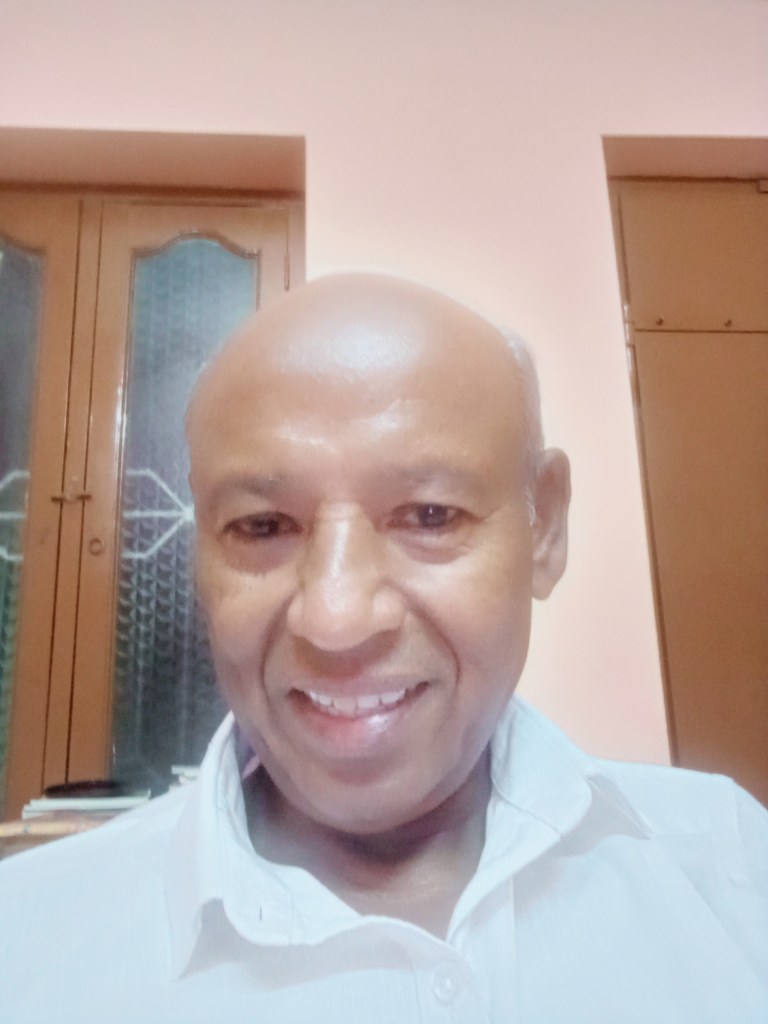
 The Ancient Indian Scriptures!